Kategóriák
News

APSTEC HSR SCREENS CROWDS AT GENEVA INTERNATIONAL MOTOR SHOW

Screening technology capable of scanning 10,000 people per hour deployed at prestigious automotive event

Geneva, March 13th 2019. Apstec Systems™ (Apstec™) today announced that its Human Security Radar (HSR) system has been deployed at the Palexpo Exhibition and Congress Centre in Geneva to improve safety and security for the International Motor Show 2019. Asptec’s HSR system is the world’s first fully automatic real-time mass people screening solution.

Held over a period of ten days, the Geneva International Motor Show is one of the automotive industry’s flagship events and attracts large numbers of visitors every year. The organisers are anticipating up to three-quarters of a million visitors over the duration of this year’s event, with capacity reaching 150,000 attendees a day during peak times.

HSR is uniquely well suited to managing this level of throughput and providing a high level of security without causing disruption to the flow of visitors into the venue, or negatively impacting their experience. Two HSR systems will be deployed for the show, each capable of screening up to 10,000 people per hour.

The Palexpo is one of the largest conference centres in Europe, and as such has a duty of care to its visitors. Traditional security checkpoints or manual searches, which scan one individual at a time, are not suited to large venues and public places, leading to queues and delays. Although security is still paramount, attention has moved towards the need to add a critical level of defence that doesn’t impede visitor experience.

HSR was designed to address this challenge, and offers a practical and cost-effective solution to security screening in high footfall scenarios. The first fully automated, real-time mass screening solution, HSR provides seamless security to protect public places from terrorist attacks.

Developed by specialists in the fields of radio physics, electronics and software engineering, the walkthrough system has been built in conjunction with leading authorities and ‘end users’ in security and counter-terrorism.

HSR screens for mass casualty threats including improvised explosive devices concealed on the body or in body-worn bags, and firearms wherever they are carried, without the need for an operator to inspect suspect materials. It leverages centimeter wave technology, meaning it can discriminate explosives from benign materials, with a high degree of accuracy.

Gregory Labzovsky, CEO, Apstec, explained: “Until recently, it’s been almost impossible to secure public spaces in a simple and cost-effective way, with existing approaches to security screening proving to be impractical, inconvenient and expensive to operate. HSR enables venue owners to close a critical security capability gap without impacting the experience of their patrons. We’re delighted to be working with The Geneva International Motor Show to enhance safety for thousands of motoring exhibitors and enthusiasts.”

The Palexpo’s deployment of HSR is the latest major implementation of this new technology. The system has been installed in some of the world’s busiest airports, as well as in sports stadiums, entertainment venues, mass transport hubs and networks.
Kategóriák
News

Apstec’s HSR to Enhance Security at Esenboga International Airport

Pioneering technology capable of scanning 10,000 people per hour will bolster security in crowded terminal entrances

November 28, 2018 – Apstec Systems™ (Apstec™) today announced that its Human Security Radar® (HSR®), the first fully automatic real-time mass people screening solution, has been selected by Esenboga Airport, Ankara, to significantly boost security in land side areas. Chosen following a rigorous selection process, including a pilot installation, HSR will be installed at the terminal entrances as part of ongoing security enhancement measures by the Turkish State Airports Authority. It will enable people screening without slowing down the flow of traffic, with each system capable of scanning up to 10,000 individuals per hour. The technology was deployed in partnership with local distributer AKBA.

The devastating attacks on Ataturk Airport in Istanbul and Brussels Airport highlighted the vulnerability of the land side of airports to terrorism. Since these events there has been global interest in securing the land side of airports, but traditional aviation style security checkpoints or manual searches, which scan one individual at a time, are not suited to purpose and result in large queues of passengers, which are vulnerable to attack in their own right. With existing approaches to security screening providing impractical, inconvenient and expensive to operate, terminals have remained susceptible to attack, or are subject to intrusive and disruptive security screening regimes.

HSR® was designed to address this challenge, and offers a practical and cost-effective solution to security screening in such high footfall scenarios. The first fully automated, real-time mass screening solution, HSR ® provides seamless security to protect public places from terrorist attacks. The walkthrough system uniquely combines unparalleled high throughput, speed and accuracy, simultaneously screening multiple subjects in real-time for threats, without the need for an operator to inspect suspect materials. With 40,000 passengers traveling through Esenboga Airport every day, the deployment of HSR will be instrumental in improving security for millions of people.

“HSR constitutes a major breakthrough in the way airports protect the land side of terminals,” commented Osman Aksoy & Sirzat Balin,Co-Founders, AKBA. “Through deploying HSR as part of its commitment to terminal safety and enhanced security measures, the Turkish Airport Authority has taken a major step to prevent the reoccurrence of terrorist attacks.”

Esenboga Airport’s uptake of HSR is the latest major deployment of the technology, which is currently utilised by some of the world’s largest airports, as well as sports stadiums, entertainment venues, mass transport hubs and networks, places of worship, hotels and high-end retail and entertainment centres.

“HSR is proven to dramatically improve safety in crowded public spaces, and enables venue owners to close a critical security capability gap,” added Gregory Labzovsky, CEO, Apstec. “We’re therefore delighted to be working with Esenboga Airport to enhance safety for millions of travellers. AKBA, our distributor in Turkey, were instrumental in helping the Turkish Authorities understand the potential of HSR.”

Source: www.apstecsystems.com

Kategóriák
News

Smiths Detection delivers effective lithium battery detection


Smiths Detection now offers reliable and accurate lithium battery detection as an option on the HI-SCAN 100100V-2is and 100100T-2is scanners, with other conventional X-ray systems to follow. Existing installations can also be upgraded on site. This is the first module from a series of smart and adaptable algorithms for the automatic detection of an ever expanding list of dangerous, prohibited and contraband goods and substances.

Taking the deep learning approach, Smiths Detection is collaborating with customers to build a huge library of images from which the algorithms can ‘learn’ to detect many other items. “The lithium battery development follows IATA’s recommendations regarding Dangerous Goods and is aimed mainly at the air cargo sector,” explained Matt Clark, VP Technology & Product Development, Smiths Detection. “It is designed to tackle the tangible threat posed by lithium batteries, which have the potential to ignite when airborne. In addition to extending this option to a full range of systems, we plan to expand these augmented detection capabilities to goods such as weapons, flammable liquids, currency and drugs.”

As it is particularly suitable for break-bulk cargo screening and is already popular with air freight handlers, the HI-SCAN 100100 series was first in line for the lithium battery option.

The combination of excellent performance and small footprint makes these scanners ideal wherever parcels with diverse shapes and sizes need to be screened. Positioned at 90° to each other, two 160 kV generators speed up the inspection time of tightly packed items by providing both horizontal and vertical views. For further efficiency, there is a choice of conveyor heights and a maximum load of 220kg. HI-SCAN 100100 series scanners are compliant with EU regulation 2015/1998.

The lithium battery kit uses an external evaluation computer to host the detection software, which analyses the contents and “frames” any detected batteries – this data can be shown on the main system monitor or on an additional screen. Adding this detection function does not affect the speed of overall image evaluation and little or no training is required. It is available now as an option on new HI-SCAN 100100 series scanners or as an upgrade for existing machines.


Kategóriák
News

Further STAC approval for Smiths Detection’s Checkpoint.Evoplus


The latest version of Smiths Detection’s Checkpoint.Evoplus software has been certified by STAC for use at French airports. Version 2.2. has followed in the footsteps of 2.1, which was the first ever solution for multiplexed image analysis to receive official approval from the French civil aviation authority technical centre. An advanced screening and management platform, Checkpoint.Evoplus is designed to increase passenger throughput; optimise resources; reduce operational costs; and raise security levels.

“Both versions of Checkpoint.Evoplus have now gained STAC certification –further approval for a very innovative platform, which continues to set the standards for checkpoint management software,” commented Matt Clark, VP Technology & Product Development, Smiths Detection. “It holds the key to ensuring that checkpoints can reach their full potential by delivering the highest levels of security and also significant operational advances.”

Checkpoint.Evoplus transforms a collection of individual components and sensors into a single, integrated and intelligent solution. Providing valuable operational data and supporting new functions such as centralised screening and directed search, it streamlines the overall screening process whilst also enhancing security. The impressive potential of this platform is demonstrated by a number of installations already linking hundreds of checkpoints across nationwide airports – and it can also support international networking.

2D and 3D ready, Checkpoint.Evoplus is also designed to be vendor independent in order to support third-party devices, technology and lanes with open interfaces. It enables complex data exchange between hold baggage and passenger checkpoint screening, which could well improve security even further and generate additional operational benefits.


Kategóriák
News

Hi-Scan 6040 CTiX receives TSA’s TSL Certification


Smiths Detection’s HI-SCAN 6040 CTiX, a Computed Tomography (CT) checkpoint scanner, has passed laboratory inspection earning a TSL Advanced Technology (AT-2) Tier II certification from the U.S. Transportation Security Administration (TSA). Smiths Detection engineered the CTiX to help airport operators minimize improvement costs since the scanner is easily incorporated into existing checkpoint lanes.

Smiths Detection is a global leader in applying X-ray and Computed Tomography (CT) to aviation, ports & borders, and government building security. The CTiX is Smiths Detection’s latest innovation and has been designed to enhance airport screening; efficiency; and passenger experience at the checkpoint.

The CTiX examines baggage contents from every angle, generating precise 3D images. Although TSA has tested CTiX capabilities (e.g. eliminating the need to remove electronic devices and liquids from carry-on baggage), TSA is still determining checkpoint procedures.

Cameron Ritchie, Vice President, Technology & Product Development, said, “Airport and airlines throughout the world rely on Smiths Detection’s experience and expertise in delivering reliable detection equipment and technology. This CTiX certification demonstrates our commitment to developing security screening technology. The CTiX represents the future of checkpoint security, and we are moving towards completing the TSA certification process so that it can be chosen by airports and partners in the Americas and throughout the world.”

The CTiX is a key component of Smiths Detection’s advanced integrated screening solutions, which includes the iLane, a sophisticated automated checkpoint lane which automatically separates suspicious belongings which have been screened. Other integrated solutions include Checkpoint.Evo Plus, CORAL – digital platforms enabling remote screening and/or service, and IONSCAN 600 which is the latest generation of trace detection technology.


Kategóriák
News

Smiths Detection HI-SCAN 6040 CTiX scanner granted EDS CB C2 approval


Ground breaking scanner allows electronic devices to stay in bags

Smiths Detection releases its first checkpoint scanner with innovative Computed Tomography (CT) technology, following approval by ECAC for EDS CB C2 – testing for C3 will follow swiftly. CT is a complete game-changer for checkpoint security as, using the company’s proprietary technology, the HI-SCAN 6040 CTiX can allow electronic devices to stay in bags, addressing the three critical issues for airport operators: security, efficiency and passenger experience.

Delivering improved productivity, higher throughput and lower costs, this impressive scanner eliminates the need to remove electronic devices from hand luggage (subject to approval from the appropriate local authorities). This reduces the number of trays per person and makes the whole process simpler and shorter – a move sure to please the travelling public. Baggage contents are examined from every angle and 3D images are generated with very precise data so more accurate judgements can be made on substances within the bag.

“The future really is here for checkpoint security,” observed Matt Clark, VP Technology & Product Development. “Integrating the HI-SCAN 6040 CTiX into a smart checkpoint with the latest lane design and software will revolutionise the screening process and passenger experience. And we can also look beyond the C3 hurdle as CT is also the only technology likely to meet a potential, higher C4 standard. Before long, new algorithms may well be used to identify a range of additional prohibited items and materials.”

To minimise upgrade costs, the HI-SCAN 6040 CTiX can easily be incorporated into existing checkpoint lanes. The addition of an advanced screening and management platform, such as Smiths Detection’s Checkpoint.Evoplus, will streamline operations even further by providing remote screening and directed search; as well as providing access to valuable management data.

The HI-SCAN 6040 CTiX is available now.


Kategóriák
News

Smiths Detection hold baggage scanner meets highest security standards in EU


The Smiths Detection HI-SCAN 10080 XCT has achieved ECAC approval as a Standard 3.1 explosives detection system for hold baggage – the highest, defined security standard in the EU. This significant advance was made possible by using a dual-view, dual-energy line scanner with high resolution 3D Computed Tomography (CT) to deliver exceptional data.

This achievement gives airports currently upgrading to Standard 3 technology, the option to increase detection levels even further to 3.1; and any standard 3 systems already installed can be easily elevated to 3.1 via a software upgrade. The detection algorithms are interchangeable on a bag by bag basis depending on the destination and associated risk level. This offers additional flexibility and productivity.

“With the capability to meet detection requirements for both current and emerging threats, the HI-SCAN 10080 XCT is a future proof investment, which offers high levels of security and operational efficiency,” commented Matt Clark, VP Technology & Product Development, Smiths Detection. “We are helping airports across Europe to make the transition to Standard 3 and are delighted to now also offer the more stringent Standard 3.1 approved technology.”

The belt speed is an impressive 0.5m/sec, enabling the HI-SCAN 10080 XCT to handle up to 1800 bags per hour and hence making the screening process faster and more efficient. A large rectangular tunnel (107 x 81cm), extremely high quality, full colour images and a low false alarm rate all also support the challenging performance levels demanded by airports.

In addition to Standard 3.1 approval, the HI-SCAN 10080 XCT has been laboratory certified by the US Transportation Security Administration (TSA) as meeting current regulatory requirements for hold baggage.


Kategóriák
News

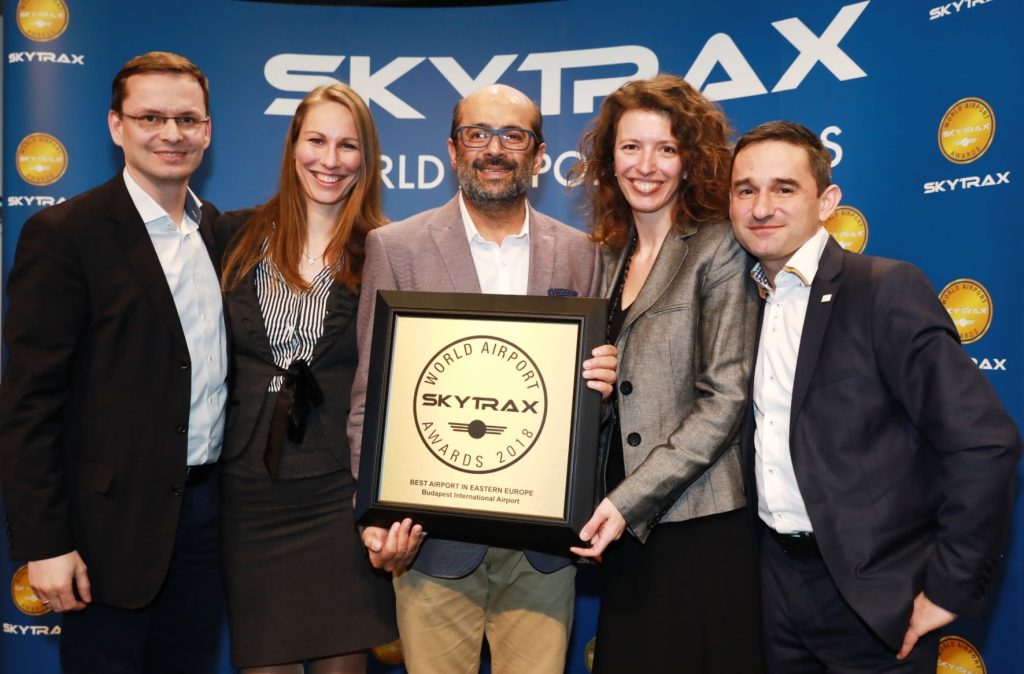
Unprecedented: Budapest Airport receives Skytrax award for the fifth time!


Budapest Liszt Ferenc International Airport was announced ‘Best Airport in Eastern Europe’ for the fifth consecutive time by Skytrax. In the history of the most prestigious award in the industry based on passengers’ votes, winning the title in five consecutive years by the same airport in the region has been unprecedented. Skytrax is a prestigious London-based aviation consultancy which compiles global and regional rankings of airlines and airports every year.

This time Budapest Airport received the award in Stockholm. The biggest European event of the airport business was hosted by the Swedish capital this year; the Skytrax awards were also handed over at the gala event. The title of ‘Best Airport in Eastern Europe’ was won by Budapest Airport for the fifth time in a row now. The value of the price is made special by the fact that it is passengers themselves who make the decision, as the lists are compiled on the basis of interviewing tens of thousands of passengers worldwide. Since this is an anonymous survey, its subjects have no way of influencing the results.

“Winning the Skytrax award for the fifth time means an appreciation for the work of the whole airport community in Budapest. All of them contributed to the continuous development of Budapest Liszt Ferenc International Airport both in terms of services and the travel experience,” underlined Jost Lammers. The CEO added, “I am so proud of the Budapest team for breaking the record of the most consecutive wins. It is particularly meaningful after a year which saw us welcome nearly two million additional passengers compared with 2016. Not only are we holding our place among the fastest growing major airports in Europe, but we’re also being recognized for our continued promise to provide the best in all the elements which guarantee customer satisfaction.”

On taking over the award in Stockholm, Budapest Airport CCO Kam Jandu said the title acknowledges that the developments at the airport continuously extend the services provided to passengers and offer an increasingly complex experience. 2017 was the year of rapid growth for Budapest Airport. The number of passengers arriving in and departing from Budapest exceeded the 2016 figure by 14.5%, reaching more than 13.1 million in total.

It was also justified by dynamic traffic growth that three years ago Budapest Airport launched its five-year airport development project BUD 2020. One of its key elements is the new 10 000-square-meter pier currently under construction in Terminal 2B, scheduled for handover in the summer of 2018. The capacity of car parks at the airport was increased by a thousand new spaces in 2017, now accommodating more than 4 700 vehicles simultaneously.

The development that may have been the most perceptible for passengers was aimed at extending the check-in area: 11 new desks and about 400 square meters of additional space were handed over to passengers. Since last year, passenger security screening is performed with the latest body scanners, which makes the process quicker and more effective. Significant developments have also been implemented in the transit area of SkyCourt in both retail and F&B areas. After upgrading the WiFi network, ten times as many passengers can now access the internet while waiting for boarding.

The CEO of Budapest Airport said about winning the title, “We are devoted to creating an airport in Budapest which Hungary can be proud of – a premier gateway which, as a local economic generator, contributes to the community. The Skytrax award is a clear indication for us that we are on the right track.”

Source: bud.hu


Kategóriák
News

Universal Exhibition EXPO 2015 Milano – Italy


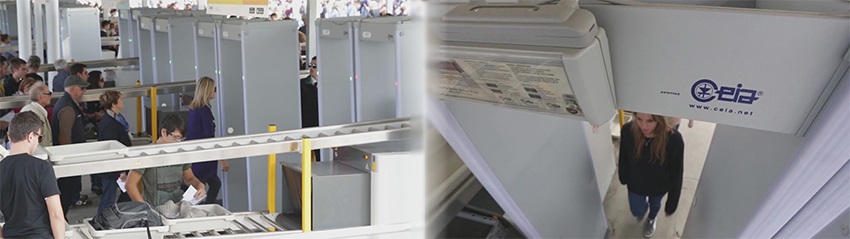
From May 1 to October 31 more than 22 million people visited the exhibition. CEIA provided over 400 Walk-Through and Hand-Held Metal Detectors (WTMDs and HHMDs) for Security Screening of visitors and staff.


CEIA fémdetektorok a Milánói Világkiállításon